
The marketing landscape has undergone a seismic shift over the past decade. Traditional marketing methods that once dominated the industry—print advertising, direct mail, cold calling—have given way to sophisticated digital strategies powered by data, automation, and cutting-edge technology. This evolution isn’t just a trend; it’s a fundamental transformation that’s reshaping how businesses understand, reach, and engage with their customers. Welcome to the era of digital transformation in marketing.
Understanding Digital Transformation in Marketing
Digital transformation in marketing goes far beyond simply having a website or social media presence. It represents a complete reimagining of how marketing functions operate, leveraging digital technologies to create more personalized, efficient, and measurable customer experiences. It’s about fundamentally changing the relationship between brands and consumers, moving from one-way communication to dynamic, data-driven conversations.
At its essence, digital transformation in marketing involves integrating digital technology into all aspects of marketing operations, fundamentally changing how value is delivered to customers. It requires a shift in organizational culture, processes, and technology infrastructure, demanding that marketing teams think differently, work differently, and measure success differently.
This transformation isn’t optional anymore. Consumer behavior has evolved dramatically, with people spending more time online than ever before, expecting personalized experiences, and demanding seamless interactions across multiple channels. Businesses that fail to transform risk becoming irrelevant in an increasingly digital world.
The Driving Forces Behind Digital Transformation
Several powerful forces are propelling digital transformation in marketing forward, creating both opportunities and imperatives for businesses to evolve.
Changing Consumer Expectations
Today’s consumers are more informed, connected, and empowered than ever before. They research products extensively before purchasing, read reviews, compare prices across multiple platforms, and expect brands to understand their preferences and needs. They demand personalized experiences that feel tailored to them, not generic mass marketing messages.
Consumers also expect consistency across all touchpoints. Whether they’re browsing on mobile, visiting a physical store, or engaging on social media, they want a seamless, unified experience. This omnichannel expectation requires sophisticated digital infrastructure and coordination across marketing channels.
Data Explosion
The volume of data available to marketers has grown exponentially, and Digital Transformation in Marketing plays a key role in unlocking its value. Every click, view, purchase, and customer interaction generates data that reveals valuable insights into customer behavior, preferences, and intent. While this data revolution offers an unprecedented understanding of audiences, it also requires advanced tools and capabilities to collect, analyze, and act on information effectively.
Digital transformation in marketing has shifted decision-making from intuition to analytics-driven strategies. Marketers who successfully harness data gain a powerful competitive advantage, enabling them to understand not only what customers are doing, but why they behave the way they do—and what actions they are likely to take next. This deeper insight leads to more informed decisions, improved targeting, and stronger customer relationships.
Technological Advancements
Rapid technological innovation continues to expand what’s possible in marketing. Artificial intelligence and machine learning enable sophisticated personalization at scale. Marketing automation platforms streamline repetitive tasks and nurture leads more effectively. Customer relationship management systems provide comprehensive views of customer interactions. Cloud computing makes powerful tools accessible to businesses of all sizes.
These technologies aren’t just improving existing processes; they’re enabling entirely new approaches to marketing that weren’t possible before. Voice search, augmented reality, chatbots, predictive analytics—these innovations are reshaping customer experiences and creating new opportunities for engagement.
Key Components of Digital Transformation in Marketing
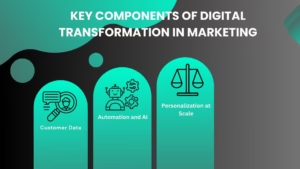
Digital transformation in marketing encompasses multiple interconnected elements that work together to create more effective, efficient marketing operations.
Customer Data Platforms and Integration
At the heart of digital transformation lies the ability to collect, unify, and activate customer data. Customer Data Platforms (CDPs) consolidate data from multiple sources—website interactions, email engagement, purchase history, social media activity, customer service interactions—creating comprehensive customer profiles.
This unified view of the customer breaks down silos that traditionally separated different marketing channels and departments. Instead of fragmented data living in isolated systems, marketers gain holistic understanding of each customer’s journey, enabling more coordinated and personalized experiences across all touchpoints.
Integration is critical. Modern marketing technology stacks often include dozens of tools and platforms. Ensuring these systems communicate effectively and share data seamlessly is essential for digital transformation success.
Marketing Automation and AI
Digital Transformation in Marketing has fundamentally changed how marketing teams operate by introducing advanced marketing automation that streamlines repetitive tasks and enables sophisticated nurturing campaigns. Automated email workflows respond to specific customer behaviors, ensuring the right message reaches the right audience at the right time. Lead scoring systems identify high-potential prospects, allowing sales teams to focus their efforts more effectively and improve conversion rates.
As part of digital transformation in marketing, artificial intelligence elevates automation to an entirely new level. AI-powered tools can predict customer behavior, recommend relevant products, optimize ad spend in real time, generate personalized content, tailor website experiences dynamically, and analyze customer sentiment across thousands of interactions. Machine learning algorithms continuously learn from data, improving accuracy and performance over time.
Rather than replacing human marketers, digital transformation in marketing enhances their capabilities. By automating routine tasks and complex data analysis, these technologies free marketers to concentrate on strategic planning, creative storytelling, and building meaningful, long-term relationships with customers.
Personalization at Scale
Consumers increasingly expect personalized experiences tailored to their interests, preferences, and behaviors. Digital transformation makes this possible at scale, delivering individualized content, product recommendations, and communications to thousands or millions of customers simultaneously.
Personalization extends across the entire customer journey. Website content adapts based on visitor behavior and characteristics. Email campaigns deliver different messages to different segments based on their stage in the buying journey. Product recommendations reflect individual browsing and purchase history. Even advertising becomes personalized, with different audiences seeing different creative and messaging.
The most sophisticated organizations use predictive analytics to anticipate customer needs before they’re explicitly expressed, creating experiences that feel almost intuitive. This level of personalization drives engagement, conversion, and loyalty, creating significant competitive advantages.
Omnichannel Marketing
Digital transformation breaks down the barriers between marketing channels, creating seamless, coordinated experiences regardless of how customers choose to engage. Omnichannel marketing ensures consistency across email, social media, website, mobile apps, physical locations, and any other customer touchpoint.
This approach recognizes that customer journeys are rarely linear. People might discover a product on social media, research it on a website, visit a physical store, and complete the purchase on mobile. Each interaction should build on previous ones, with the brand maintaining context and continuity throughout.
Implementing true omnichannel marketing requires integrated technology, coordinated strategy, and organizational alignment. It’s one of the most challenging aspects of digital transformation, but also one of the most impactful for customer experience.
Agile Marketing
Digital transformation demands greater speed and flexibility in marketing operations. Agile marketing, borrowed from software development methodologies, emphasizes rapid experimentation, iterative improvement, and data-driven decision-making.
Rather than spending months planning and executing large campaigns, agile marketing teams work in shorter cycles, quickly testing ideas, measuring results, and adapting based on what they learn. This approach enables faster response to market changes, more effective optimization, and reduced risk of major campaign failures.
Agile marketing requires cultural change as much as process change. Teams must become comfortable with experimentation, accept that some tests will fail, and focus on learning and continuous improvement rather than perfection.
Marketing automation and AI improve efficiency, accomplishing more with the same resources. Personalization increases conversion rates and customer lifetime value. The cumulative effect is significantly improved return on marketing investment.
Faster Time to Market
Digital transformation enables marketing teams to move more quickly, testing ideas rapidly and bringing campaigns to market faster. Cloud-based tools eliminate lengthy implementation cycles. Automation handles routine tasks instantly. Agile processes reduce planning cycles and bureaucracy.
This speed provides competitive advantages in fast-moving markets where being first matters. It also reduces opportunity costs, allowing businesses to capitalize on trends and opportunities before they pass.
Scalability
Digital Transformation in Marketing enables scalability that traditional marketing methods simply cannot achieve. Through automated systems, businesses can manage millions of personalized customer interactions simultaneously, delivering relevant messages at scale. Cloud-based infrastructure allows marketing operations to expand instantly as demand grows, without the need for heavy capital investments. Additionally, successful digital campaigns can be quickly amplified to reach broader audiences with minimal effort.
This level of scalability is especially valuable for growing businesses. Digital transformation in marketing allows organizations to expand their marketing capabilities efficiently, without a proportional increase in resources, costs, or operational complexity—supporting sustainable and agile business growth.
Enhanced Customer Experience
Ultimately, digital transformation in marketing is about creating better customer experiences. Personalized communications feel more relevant. Consistent omnichannel experiences eliminate frustration. Responsive interactions make customers feel valued. Predictive capabilities anticipate needs before customers have to ask.
Better customer experiences drive satisfaction, loyalty, and advocacy. In an era where customer experience increasingly differentiates successful businesses from struggling ones, this may be digital transformation’s most important benefit.
Challenges of Digital Transformation
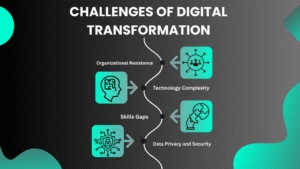
While the benefits are substantial, digital transformation in marketing isn’t without challenges. Understanding these obstacles helps organizations navigate the transformation journey more effectively.
Organizational Resistance
Change is inherently challenging, and Digital Transformation in Marketing often demands significant shifts in processes, roles, and organizational culture. Team members who are comfortable with traditional marketing approaches may resist adopting new technologies and data-driven methods. Additionally, departmental silos can limit collaboration, slowing down the transformation that modern marketing requires.
Successful digital transformation in marketing depends on strong leadership and a clear vision. Transparent communication about goals and benefits, along with continuous training and support, helps teams adapt with confidence. With patience, collaboration, and a people-first approach, organizations can successfully transition to new ways of working and fully realize the value of digital transformation in marketing.
Technology Complexity
The marketing technology landscape is vast and constantly evolving. Choosing the right tools, integrating them effectively, and maintaining the resulting tech stack requires significant expertise and resources. Many organizations struggle with tool proliferation, ending up with disconnected systems that create complexity rather than solving problems.
A thoughtful approach to technology selection, prioritizing integration and alignment with business needs over feature lists, helps avoid this trap. Starting with core capabilities and expanding deliberately typically works better than trying to implement everything at once.
Data Privacy and Security
As marketing becomes more data-driven, concerns about privacy and security intensify. Regulations like GDPR and CCPA impose strict requirements on data collection and usage. Consumers are increasingly concerned about how their information is used. Data breaches can devastate brand reputation and result in significant penalties.
Responsible digital transformation prioritizes data security and ethical use of customer information. Transparency about data practices, robust security measures, and respect for customer preferences aren’t just legal requirements—they’re essential for maintaining trust.
Skills Gaps
Digital transformation requires capabilities many marketing teams don’t currently possess. Data analysis, technical marketing, automation management, AI implementation—these skills are in high demand and short supply. Building internal capabilities through training and hiring while potentially partnering with external experts helps address these gaps.
The Future of Digital Transformation in Marketing
Digital transformation in marketing isn’t a destination; it’s an ongoing journey. As technology continues to evolve and consumer expectations continue to rise, marketing must keep transforming.
Emerging technologies like voice interfaces, augmented and virtual reality, blockchain, and more advanced AI will create new opportunities and challenges. The marketers who thrive will be those who remain adaptable, continuously learning and evolving their strategies and capabilities.
The organizations that view digital transformation as a continuous process of improvement rather than a one-time project will gain sustainable competitive advantages, building marketing capabilities that drive growth and customer loyalty in an increasingly digital world.
Conclusion
Digital transformation in marketing represents one of the most significant shifts in how businesses operate in decades. It’s reshaping customer relationships, marketing operations, and organizational cultures. The transformation journey can be challenging, requiring investment, change management, and persistence.
However, the rewards—deeper customer understanding, improved ROI, enhanced experiences, and sustainable competitive advantages—make the effort worthwhile. In a world where digital increasingly defines how people live, work, and shop, marketing transformation isn’t optional; it’s essential for survival and success.
The time to begin your digital transformation journey is now. Whether you’re just starting or well along the path, continuous evolution and improvement will keep your marketing effective and your business competitive in the digital age
for more blogs visit